Questions About Asphalt Paving Around North Zulch and the Brazos Valley
These are the questions homeowners, ranches and businesses across the
Brazos Valley ask us most: when you can drive on new asphalt, how
pricing works, paving over gravel or road base, thickness, chip seal
and the paving season. If yours is not here, call and we will answer it.
Wait a few days before you drive on new asphalt. The Asphalt Institute's driveway guidance says new hot mix can be driven on soon after it is laid. Even so, it is better to wait a few days before opening it. The same guidance says to keep a heavy moving truck off a fresh mat.
How much does asphalt paving cost?
There is no square foot price that fits every job. The price moves with the size, the base work, the access and the thickness. Material cost and mileage move it too. We come out, look at the site and give you a free estimate. Our guide to asphalt driveway cost in Texas covers the market ranges.
What areas do you serve?
We are based in North Zulch and work the Brazos Valley and about 60 miles around it. That covers Madisonville, Bryan, College Station, Huntsville, Navasota, Caldwell, Franklin, Centerville, Normangee and Iola. Larger paving and chip seal projects go farther out. Call or text (979) 595-5944 to ask about your address.
Can you pave over a gravel or road base driveway?
Yes, on a lot of drives we can. The gravel or road base gets reshaped, graded for drainage and compacted first. If it is too thin or too soft to carry asphalt, we build it up before any paving starts. We also build and rebuild gravel and road base driveways on their own.
How thick should an asphalt driveway be?
The Asphalt Institute's driveway guidance puts an ordinary residential driveway at 3.5 inches of compacted hot mix. That is a 2 inch bottom course under a 1.5 inch surface course. It sits on 6 to 8 inches of crushed aggregate base. Heavier traffic needs more. Your estimate spells out the thickness, the base work and the square footage for your job.
Should a long driveway or ranch road be asphalt or chip seal?
It depends on the traffic it carries and how you want the surface to feel. Hot mix asphalt gives a smooth, sealed surface that handles heavy trucks and turning. Chip seal is sprayed emulsion with rock rolled into it, in one, two or three courses. It suits long rural roads, and both need the same base work underneath.
Do you pave commercial parking lots and stripe them?
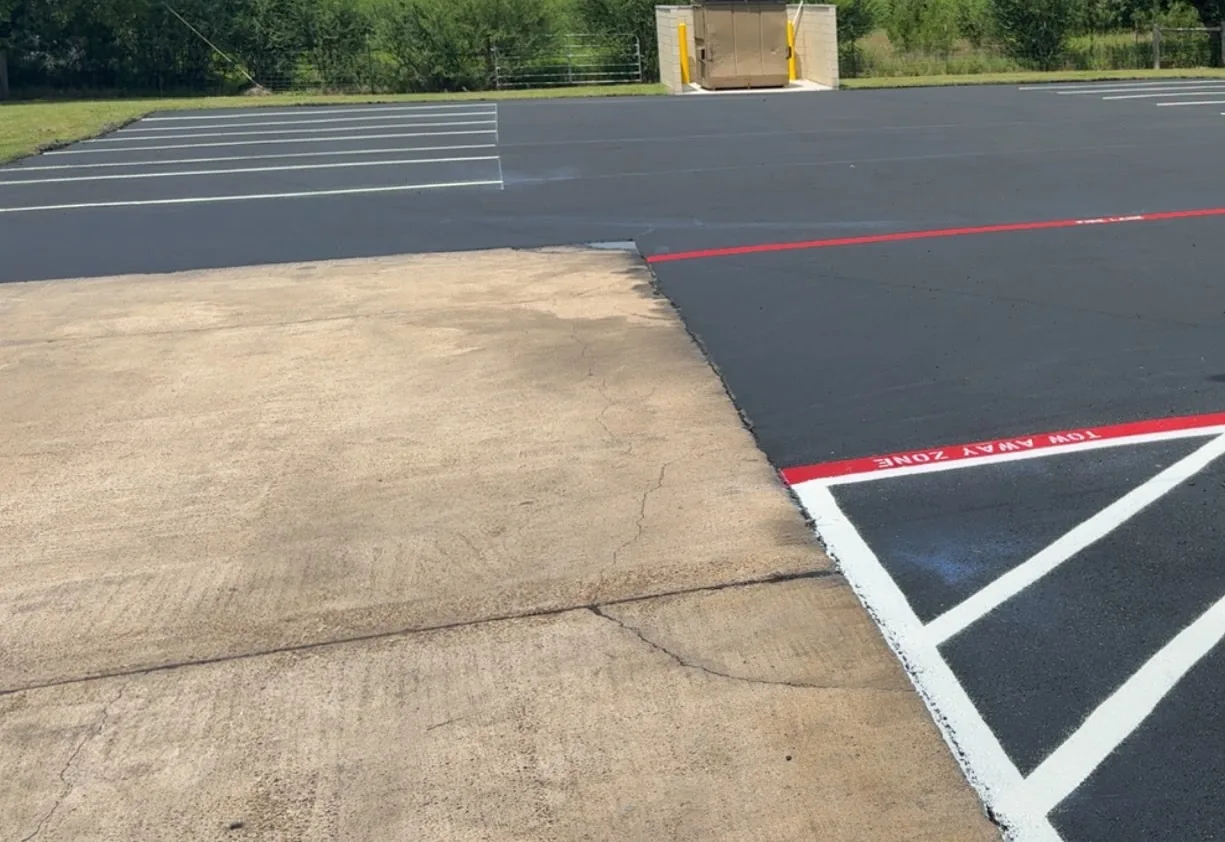
Yes. We pave and replace lots for businesses, restaurants, churches, motels and shops, and we build heavier sections where trucks run. We plan the work in phases with you so the business can keep operating. After the asphalt cures we handle the parking lot striping, including accessible spaces and access aisles.
When is paving season in the Brazos Valley?
Paving runs most of the year here. TxDOT sets the floor for hot mix by pavement surface temperature, not air temperature. A dry surface at 50 degrees or warmer covers a common surface course. Weather normals for this area show no month with an average temperature below 51 degrees. Chip seal is a warm weather job, and TxDOT's floor is a 60 degree surface.
Free Estimates
Get In Touch With JEJ Asphalt & Concrete Recovery LLC
Tell us what needs paving, sealing, patching or striping, and we will come out and look at it. Call or text (979) 595-5944, or send the form with the details of the job.